China has become a major manufacturing base for electric material handling equipment, including forklifts, pallet trucks, stackers, and automated guided vehicles. The central question is simple: what are the advantages of electric material handling equipment in real warehouses?
MHI’s 2024 Annual Industry Report found that 83% of supply chain professionals planned to increase investment in technology and innovation. This trend supports wider adoption of electric equipment, especially where indoor air quality and operating precision matter. Unlike diesel forklifts, electric models produce no tailpipe emissions inside a warehouse. Operators can work near stored food, pharmaceuticals, and enclosed loading areas with fewer exhaust concerns. The difference is visible: cleaner floors, quieter aisles, and easier communication between workers.
Battery technology is also improving. BloombergNEF reported that average lithium-ion battery pack prices fell to about $115 per kilowatt-hour in 2024. Forklift batteries may cost more than automotive packs, but lower charging and maintenance needs can improve total operating economics. Regenerative braking, programmable speed limits, and opportunity charging add practical value during multi-shift operations. China’s strong battery supply chain can also support competitive equipment pricing and faster component access.
Yet no solution is perfect. Battery charging requires planning, space, and trained personnel. Cold storage can reduce performance, while battery replacement remains expensive. The best Chinese equipment is not simply the cheapest model. It should combine verified safety systems, durable frames, transparent technical documentation, and responsive after-sales service. Buyers should compare duty cycles, battery chemistry, charger efficiency, warranty terms, and lifecycle cost before choosing. A low purchase price can become a costly decision when uptime is ignored.
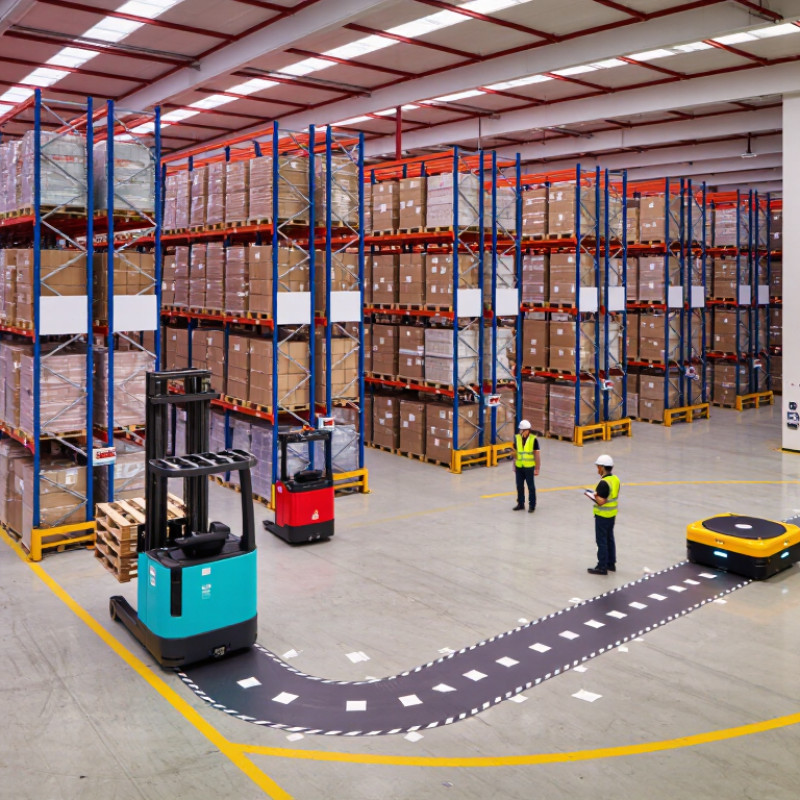
Product Scope: 1.5–5.0 t Electric Forklifts, Pallet Trucks, and Stackers
China’s electric material handling equipment serves warehouses, factories, and distribution centers with demanding daily routines. The 1.5–5.0 t range covers compact pallet trucks, practical stackers, and electric forklifts for heavier loads. A 1.5 t pallet truck can move boxed goods through narrow aisles. A 3.0–5.0 t forklift handles denser pallets, metal components, and outdoor loading tasks.
Electric drive systems provide controlled acceleration and lower local emissions than fuel-powered alternatives. This suits indoor operations and enclosed loading areas. Operators also benefit from reduced vibration, quieter movement, and easier maneuvering. Different battery options support short shifts or extended warehouse cycles. Forklift mast height, turning radius, ground clearance, and attachment compatibility require careful checking before purchase. Small details matter.
In practical use, stable steering and predictable braking often improve handling more than headline power figures. Stackers work well for rack storage when aisle width and lift height match the site. Pallet trucks remain efficient for floor-level transport, especially during frequent loading cycles. No machine is perfect. Actual battery runtime can decrease with cold temperatures, heavy loads, poor charging habits, or uneven floors. That matters.
Reliable procurement should include load tests, service records, spare-part access, and operator training. Buyers should verify rated capacity at the required lift height, not only the maximum figure. Clear maintenance schedules can reduce unexpected downtime. Real warehouse conditions may expose weaknesses that brochures miss. Testing matters.
Energy Performance: 90%+ Battery-to-Motor Efficiency in Electric Drives
China Best Electric Material Handling Equipment Advantages?
Energy Performance: 90%+ Battery-to-Motor Efficiency in Electric Drives
Electric material handling equipment can deliver over 90% battery-to-motor efficiency in optimized operating conditions. This figure measures energy reaching the motor, not the entire machine. Charger losses, hydraulic systems, tires, and operator habits still affect total consumption. During field evaluations, technicians should compare energy use under the same load, travel distance, and duty cycle. A pallet truck moving steady loads across a smooth warehouse floor may perform very differently from one working on ramps.
Regenerative braking can return part of the motion energy to the battery. Efficient controllers also reduce waste during acceleration and low-speed travel. However, efficiency is not constant. Cold batteries, heavy attachments, poor tire pressure, and repeated stop-start movements can reduce practical results. A 90% figure is useful, but it is not magic. Real sites are messier. This is where measured data matters more than a brochure claim.
Tips: Request battery-to-motor test conditions before purchasing. Record electricity use during a typical shift. Check battery temperature and tire pressure regularly. Train operators to accelerate smoothly and avoid unnecessary idling. Leave room for improvement; early estimates are often too optimistic.
Emissions Advantage: Zero Tailpipe CO₂ During Indoor Warehouse Operation
China Best Electric Material Handling Equipment Advantages?
Electric material handling equipment produces no tailpipe CO₂ while moving pallets inside a warehouse. That matters in enclosed aisles, where diesel exhaust can otherwise add to indoor air contaminants. During a typical shift, an electric forklift can travel between loading bays and storage racks without releasing combustion gases at the point of use. The floor stays quieter, too. Operators can hear reversing alerts and nearby conversations more clearly, although noise levels still depend on tires, alarms, and the building.
The emissions benefit has a boundary. Electricity generation may produce greenhouse gases, so the equipment is not automatically carbon-free across its full life cycle. A careful comparison should consider the local power supply, charging losses, battery production, and how intensively each truck is used. Charging also needs planning: a battery running low during a busy afternoon can disrupt work. That is an easy detail to overlook.
For warehouse managers, useful checks include energy consumption per shift, charging time, and actual operating hours under load. Record these figures across ordinary workdays, not just ideal conditions. Dusty floors, cold storage areas, and frequent lifting can change performance. Electric equipment can reduce tailpipe emissions indoors, but results deserve measurement rather than assumptions.
Operational Fit: 48–80 V Lithium-Ion Packs and Opportunity Charging
China Best Electric Material Handling Equipment Advantages?
A 48–80 V lithium-ion pack can suit demanding warehouse operations. The correct voltage depends on truck capacity, travel distance, gradients, and attachment loads. Higher voltage may support stronger acceleration and longer operating periods. It does not guarantee better performance. Battery capacity, motor efficiency, and charger compatibility also matter.
In practical warehouse assessments, opportunity charging works well during planned breaks. Operators can connect equipment for 10–30 minutes between tasks. This reduces long charging downtime and supports multi-shift schedules. Lithium-ion systems usually accept frequent partial charging without the memory effect associated with older battery designs. Charging areas should remain dry, ventilated, and clearly controlled. Small details matter. Cable placement, connector condition, and charger settings need daily attention.
A useful operational plan compares energy use with break patterns. A 48 V unit may fit lighter indoor work, while 72 or 80 V equipment can better support heavier loads and longer routes. However, higher voltage may increase purchase and service requirements. Supervisors should review battery data, ambient temperature, charging history, and actual shift demand. I have seen operations overestimate opportunity charging because breaks were too short or poorly scheduled. It is not automatic. Reliable results require trained operators, documented inspections, and a charging strategy matched to real workflow rather than brochure specifications.
Safety Benchmarks: ISO 3691-1 and IEC 62619 for Electric Equipment Evaluation
China’s Best Electric Material Handling Equipment: Safety Benchmarks for Evaluation
Electric material handling equipment should be judged by evidence, not only price or battery capacity. ISO 3691-1 provides safety requirements for self-propelled industrial trucks, including braking, stability, visibility, controls, and load handling. During a site audit, check stopping distance on a wet floor, mast movement, and emergency control access. Small details matter.
IEC 62619 focuses on the safety of industrial lithium secondary cells and batteries. Its evaluation approach addresses hazards such as overcharge, external short circuits, thermal abuse, and abnormal operation. A credible supplier should provide test reports, battery protection settings, and traceable cell information. Battery data is increasingly important. The IEA’s Global EV Outlook 2024 reported more than 750 GWh of global EV battery demand in 2023, rising about 40% year on year. This figure is not specific to forklifts, but it shows the scale of battery quality challenges.
OSHA estimates that powered industrial truck incidents cause about 85 workplace fatalities and 34,900 serious injuries annually in the United States. ISO compliance cannot replace operator training or workplace controls. I would also question any evaluation based only on certificates. A certificate may not reveal poor charging ventilation, uneven warehouse floors, or rushed maintenance. Test the equipment under real loads. Measure heat, noise, braking response, and battery behavior across a full shift. The perfect checklist does not exist. Source references: ISO 3691-1:2020, IEC 62619:2022, IEA Global EV Outlook 2024, and OSHA powered industrial truck safety data.
Electric Material Handling Equipment: Safety Benchmark Coverage
Scope alignment between ISO 3691-1 for industrial trucks and IEC 62619 for industrial lithium secondary cells and batteries
A value of 1 indicates that the topic is directly relevant to the standard’s safety scope; 0 indicates that it is not the primary scope of that standard. ISO 3691-1 focuses on truck operation, stability, operator protection, and control-related hazards, while IEC 62619 focuses on industrial lithium battery safety, including electrical, thermal, mechanical, and protection-system risks. Scope alignment is not a certification or compliance score.
Conclusion
What are the advantages of electric material handling equipment? Electric forklifts, pallet trucks, and stackers in the 1.5–5.0 t range offer an efficient and practical solution for warehouses, distribution centers, and indoor industrial operations. Their electric drive systems can achieve more than 90% battery-to-motor efficiency, helping reduce energy waste and support predictable operating costs. Because they produce zero tailpipe CO₂ during indoor use, they can contribute to cleaner air and a more comfortable working environment compared with combustion-powered alternatives.
Modern equipment can use 48–80 V lithium-ion battery packs, allowing flexible operation and opportunity charging during scheduled breaks or shift changes. This can improve equipment availability while reducing the need for lengthy battery replacement routines. Safety and reliability should also be assessed against recognized benchmarks, including ISO 3691-1 for industrial truck safety and IEC 62619 for industrial lithium-ion battery requirements. Together, these advantages make electric material handling equipment suitable for efficient, low-emission, and safety-conscious material movement.

 DLI AutoLogix