How to Charge and Maintain Electric Pallet Trucks?

Time:2026-09-29 Author:Amelia
0%

Electric pallet trucks support quiet, efficient movement across warehouses, retail backrooms, and loading areas. Yet their reliability depends on daily charging discipline and practical inspection. MHI’s 2024 Annual Industry Report found that 80% of supply chain leaders planned to increase automation investment. That trend makes dependable material-handling equipment more important, not less. BloombergNEF reported that average lithium-ion battery pack prices fell 14% in 2023, reaching $139 per kilowatt-hour. Lower battery costs may encourage electrification, but they do not remove maintenance responsibilities.

This guide explains how to charge and maintain electric pallet trucks safely and consistently. Operators should confirm the battery type, charger rating, and manufacturer’s instructions before connecting anything. Lead-acid batteries may require water checks, ventilation, and controlled charging areas. Lithium-ion batteries usually need different connectors, monitoring systems, and temperature limits. Small details matter. A damaged cable can heat during charging. A loose connector can interrupt a shift. Dust around wheels, forks, or charging contacts can also hide early problems.

OSHA’s powered industrial truck requirements, including 29 CFR 1910.178, emphasize designated charging areas, ventilation, fire protection, and suitable emergency facilities. These requirements provide a dependable baseline, but every workplace needs a site-specific risk review. A checklist alone is not enough. It may miss unusual battery behavior or rushed operator habits. A trained supervisor should record charging times, visible damage, fault codes, and repeated performance changes. That record turns maintenance from guesswork into evidence-based action. Some procedures may feel overly cautious. They are still worth questioning, testing, and improving.
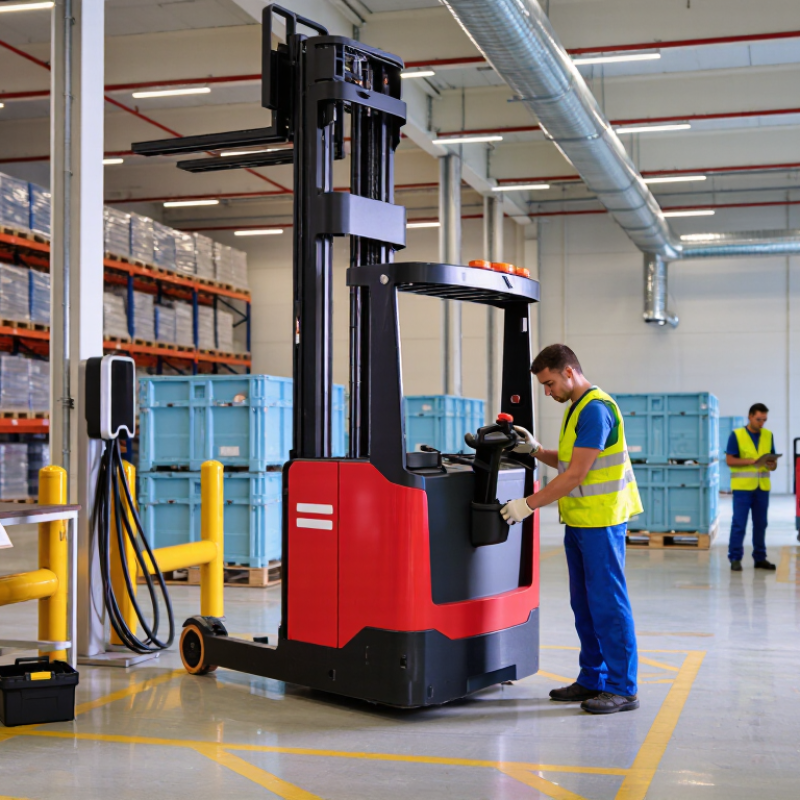
How to Charge and Maintain Electric Pallet Trucks?

Understanding Electric Pallet Truck Batteries and Charging Requirements

Electric pallet truck battery care starts with matching the charger to the battery chemistry and voltage. Lead-acid batteries need scheduled full charges and ventilation; lithium-ion batteries usually tolerate opportunity charging better. Do not treat them as interchangeable. A mismatched charger can shorten battery life or create a safety risk. Check the truck manual and battery label before plugging in.

The U.S. Department of Energy’s Alternative Fuels Data Center reports that roughly 16% of energy can be lost during electric-vehicle charging. That figure is not specific to pallet trucks, but it shows why charging conditions matter. Keep connectors clean and dry, and charge in a designated area with clear airflow. For lead-acid units, check electrolyte levels only as the manufacturer directs; never top up before charging unless the manual says so. Small habits count.

Charge when the display or work schedule calls for it, rather than waiting for a truck to stop mid-shift. Log charging times, battery temperature, and run time. A warm case after charging deserves attention. So does a sudden drop in operating hours. Battery deterioration is gradual, and operators may overlook it. One imperfect shift log is better than no record at all. Use trained personnel for inspections, and take damaged, leaking, or unusually hot batteries out of service for qualified assessment.

How to Charge and Maintain Electric Pallet Trucks

Typical charging and operating figures vary with battery capacity, truck load, ambient temperature, and duty cycle. Lead-acid batteries commonly require a full charge of about 8 hours and regular watering, while lithium-ion batteries can often be charged in about 2 hours and require less routine maintenance. Always follow the battery and truck manufacturer’s charging instructions.

Preparing the Pallet Truck for Safe and Efficient Charging

Safe charging begins before plugging in. Park the electric pallet truck on level ground, lower the forks, apply the brake, and switch it off. OSHA 29 CFR 1910.178(g) requires designated charging areas, suitable ventilation, and protection from vehicle damage. Check the floor for oil, water, and loose packaging. That detail is often missed. The IEA’s Global EV Outlook 2024 reports that global battery demand exceeded 750 GWh in 2023. More battery systems mean greater attention to correct charging equipment and procedures.

Inspect the battery housing, cables, plug, and connector for cracks, heat marks, or exposed wires. Confirm that the charger matches the battery type, voltage, and capacity. Never force a connector or bypass a warning light.

Lead-acid batteries may release hydrogen, so keep flames, sparks, and smoking materials away. Wear the required eye and hand protection. For lead-acid units, add water only according to the manufacturer’s instructions, usually after charging and cooling.

Tips: Keep a visible pre-charge checklist beside the charging station. Record unusual smells, slow charging, or repeated alarms. Remove damaged equipment from service. A similar-looking charger may still be electrically wrong. One weak point remains: rushed operators often skip inspections during busy shifts. A short pause can prevent a costly mistake. Review the process after every near-miss, even when nobody gets hurt.

Charging an Electric Pallet Truck Step by Step

How to Charge an Electric Pallet Truck

Charging an electric pallet truck starts with a careful inspection. Park it on a level, dry surface with the forks lowered. Switch off the truck and set the controls to neutral. Check the battery case, connector, and charging cable for cracks, heat damage, or loose parts. Do not charge damaged equipment. Keep the area ventilated and free from paper, oil, and other clutter.

Confirm that the charger matches the truck’s battery type and voltage. Lead-acid and lithium batteries require different charging methods. Connect the charger exactly as the equipment manual directs, then start the charging cycle. Watch the indicator during the first few minutes. It should show a normal charging status, not an error or unusual heat. Never move the truck while it is connected. Allow the cycle to finish, and disconnect the charger in the recommended order.

Small details protect battery life. For serviceable lead-acid batteries, inspect fluid levels only as instructed and use distilled water when required. Never add water to a lithium battery. Clean terminals with suitable equipment, not a wet cloth. I have learned that rushed inspections cause avoidable mistakes. A cable may look fine but feel unusually warm. Stop and report it. Record charging time, faults, and battery condition after each shift. These notes help technicians identify gradual performance changes before the truck becomes unreliable.

Maintaining the Battery, Charger, and Electrical Components

How to Charge and Maintain Electric Pallet Trucks?

Battery care begins with the charging area. Keep it dry, ventilated, and free from cardboard or leaking liquids. OSHA requires suitable facilities for battery charging, including eye and body flushing equipment. Inspect cables, plugs, and terminals before every shift. A warm connector, cracked casing, or sharp chemical smell needs immediate attention. Do not ignore small faults. They often become expensive failures.

Use the charger recommended for the battery chemistry and rated capacity. Charging with the wrong profile can create heat, reduce capacity, or damage cells. The U.S. Department of Energy reports that lithium-ion storage systems often exceed 90% round-trip efficiency, while lead-acid systems commonly reach 80–85%. That difference makes charging habits financially important. Avoid repeatedly interrupting lead-acid charging, but follow the manufacturer’s instructions for lithium-ion systems. Never cover a charger during operation. Leave airflow around its vents.

Check battery voltage, temperature, and charging time through routine records. A truck that suddenly needs longer charging deserves investigation. Clean corrosion with approved procedures, not improvised tools. I have seen operators tighten a loose terminal and stop there; the underlying heat damage remained. That shortcut needs reconsideration. Monthly inspections should include insulation, fuses, connectors, and emergency disconnects. Maintenance logs should record dates, readings, defects, and corrective actions. Clean data supports safer decisions.

Inspecting, Storing, and Troubleshooting the Pallet Truck

How to Charge and Maintain Electric Pallet Trucks?

Inspecting, storing, and troubleshooting an electric pallet truck protects both operators and equipment. OSHA estimates that powered industrial trucks cause about 85 fatal accidents and 34,900 serious injuries annually in the United States.

Before each shift, check the forks, wheels, tiller, emergency stop, warning horn, cables, and battery connector. Look for cracks, exposed wires, leaks, or unusual heat. A loose connector can interrupt power suddenly. It happens more often than expected.

Charge the truck in a designated, ventilated area. Keep flames, sparks, and metal tools away from lead-acid batteries. Follow the battery maker’s charging limits and never interrupt a programmed cycle without a clear reason. For lithium-ion units, inspect the casing for swelling or impact damage.

Store the truck on level ground, lower the forks, switch it off, and remove the key. OSHA 1910.178 requires an examination before equipment enters service each day or shift. That small routine is easy to rush.

Troubleshooting should begin with simple observations. If the truck will not move, check the emergency stop

FAQS

How should an electric pallet truck be prepared for charging?

Park it on level ground, lower the forks, apply the brake, and switch it off. A short pause matters.

What should be checked before connecting the charger?

Inspect the battery housing, cables, plug, and connector for cracks, heat marks, or exposed wires. Never force the connector.

How can operators confirm that a charger is suitable?

Match the charger with the battery type, voltage, and capacity. A similar-looking charger may still be electrically wrong.

Where should an electric pallet truck be charged?

Use a designated, ventilated area with protection from vehicle damage. Keep the floor free from oil, water, and loose packaging.

What precautions apply when charging lead-acid batteries?

Keep flames, sparks, smoking materials, and metal tools away. Wear suitable eye and hand protection. Add water only as instructed.

What should be inspected before every work shift?

Check the forks, wheels, tiller, emergency stop, warning horn, cables, and battery connector. Look for leaks, cracks, exposed wires, or unusual heat.

What should happen if the truck will not move?

Check the emergency stop, battery connection, charge level, and control display. Do not reset faults repeatedly and hope they disappear.

When should the pallet truck be removed from service?

Isolate it immediately for smoke, strange smells, hot cables, repeated fault codes, or visible battery damage. Use qualified service support. Do not bypass safety switches.

How should the pallet truck be stored after use?

Park on level ground, lower the forks, switch it off, and remove the key. A checklist beside the charging area helps, though busy operators may still skip it.

How can charging and maintenance records improve safety?

Record slow charging, unusual smells, alarms, and near-misses. Review the process after each event, even without injury.

Conclusion

This guide explains how to charge and maintain electric pallet trucks safely and effectively. It introduces common battery types and charging requirements, then covers how to prepare the truck by parking it securely, switching it off, and checking the charging area and equipment. A clear step-by-step charging process helps operators connect the charger correctly, monitor the charge, and disconnect the equipment safely when charging is complete.

Regular care can help extend battery life and support reliable operation. The guide outlines routine checks for the battery, charger, cables, connectors, and other electrical components, along with advice for keeping equipment clean and storing the truck appropriately when it is not in use. It also highlights basic inspections and troubleshooting practices to help identify issues early and determine when qualified service is needed.

Amelia

Amelia

Amelia is a seasoned marketing professional with a wealth of expertise in our company’s core offerings. With an unwavering passion for driving growth and innovation, she plays a pivotal role in shaping our marketing strategies and enhancing brand visibility. A key aspect of her responsibilities......